Leon Patterson · 5 October 2026
Exploring Graph Connections for Idea Synthesis Among Independent Researchers
Independent researchers often work across scattered datasets and personal archives, yet graph connections provide a structured way to link concepts that span multiple projects, and this approach draws from established methods in network analysis to reveal patterns in knowledge. Researchers map individual ideas as nodes while edges represent relationships such as shared themes, citations, or methodological overlaps, which allows synthesis to emerge through traversal rather than linear reading alone.
Core Principles of Graph-Based Synthesis
Graph structures organize information by treating each research note or finding as a vertex that connects to others based on explicit criteria, and data shows that such models scale effectively when independent operators add entries incrementally over months or years. Observers note that tools like graph databases enable queries that surface indirect links, for example connecting a climate data point from one study to an economic model from another through an intermediate variable like resource allocation.
Those who've studied knowledge management practices find that independent researchers benefit when they define edge types early, such as "extends," "contradicts," or "applies in," because consistent labeling reduces noise during later retrieval. Studies from academic institutions indicate that this consistency improves recall rates when users revisit archives after extended periods away from the material.
Practical Implementation Among Solo Operators
People who maintain independent research practices frequently begin by exporting notes from common applications into graph-compatible formats, and then they import the data into systems that support property graphs. This step creates an initial map where clusters form around dominant themes while outliers remain visible for future integration.
In October 2026 several workshops organized by European research consortia will demonstrate live workflows that import bibliographic records alongside personal annotations, which gives participants hands-on experience building edges between published findings and unpublished observations. Researchers at institutions across Canada have documented similar processes in reports that highlight reduced duplication of effort once cross-project links become queryable.
Tools and Data Sources Supporting the Approach
Software options range from open-source libraries such as NetworkX in Python to dedicated platforms that offer visual canvases for manual edge creation, while integration with citation managers adds another layer of automated connections. Evidence from university studies reveals that hybrid setups, combining automated suggestions with human review, yield the highest accuracy when researchers verify each proposed link against source material.
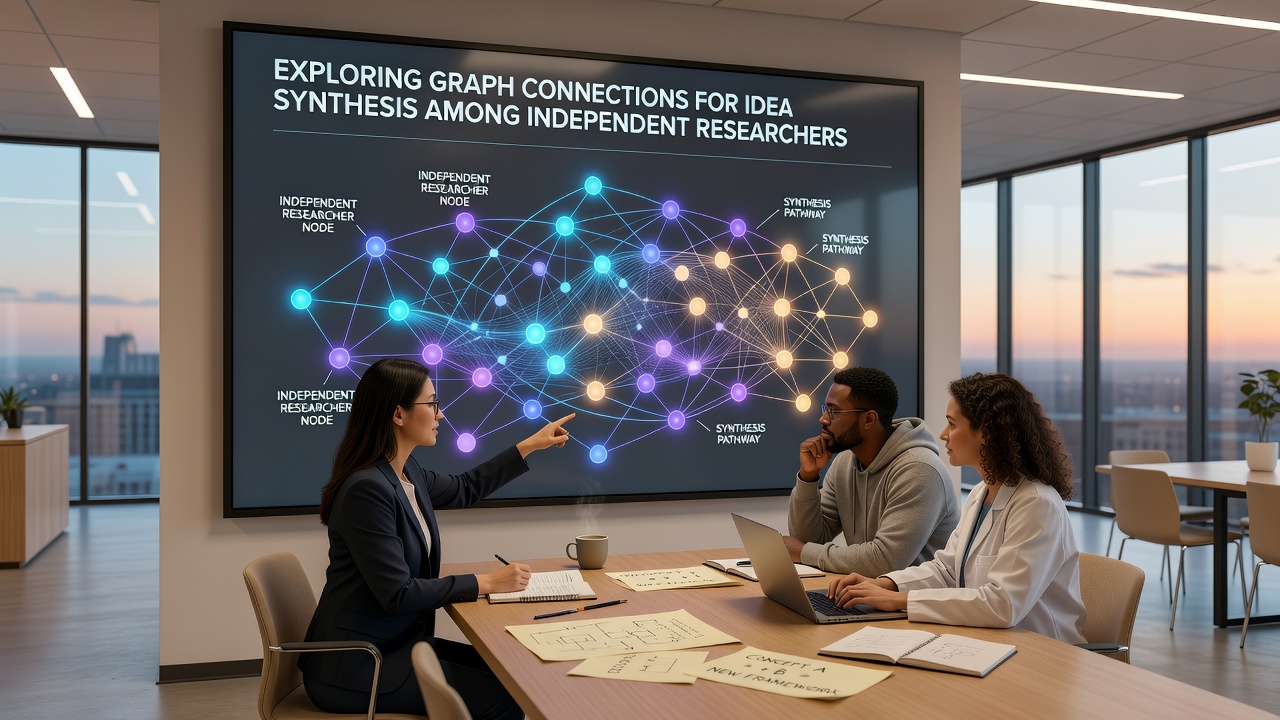
One documented case involved an independent analyst who linked three separate investigations on urban mobility by creating edges based on shared geographic variables, and the resulting graph exposed a policy implication that none of the original projects had addressed individually. Similar patterns appear in reports from Australian research centers that track how graph methods accelerate interdisciplinary insight without requiring formal team structures.
Challenges and Observed Patterns
Scalability remains a recurring consideration because graphs grow dense as entries accumulate, yet techniques such as community detection algorithms help surface meaningful subgraphs amid the expansion. Data from longitudinal projects indicates that periodic pruning of low-value edges maintains performance without sacrificing connectivity that later proves relevant.
Privacy considerations arise when researchers incorporate external datasets, and guidelines from bodies like the National Research Council of Canada emphasize anonymization steps before ingestion. Those who have implemented these safeguards report sustained collaboration opportunities with institutional partners who otherwise restrict data sharing.
Emerging Developments Through 2026
Advances in embedding techniques now allow semantic similarity to generate candidate edges automatically, and preliminary findings from multi-institution pilots show improved discovery rates when these suggestions undergo human validation. Independent researchers gain particular advantage here because they can apply updates at their own pace rather than aligning with group schedules.
What's interesting is how regional networks in the Asia-Pacific area have begun sharing graph schemas that standardize certain edge types across disciplines, which reduces friction when one operator incorporates another's published maps into a personal system. Such sharing occurs through repositories that enforce version control on the underlying schemas themselves.
Conclusion
Graph connections offer independent researchers a durable framework for idea synthesis that accommodates both manual curation and algorithmic assistance, and continued refinement of tools alongside clearer documentation standards supports wider adoption. Observers note that the method integrates well with existing note-taking habits while adding retrieval capabilities that scale alongside growing archives. As workshops and shared resources expand through 2026, the approach is positioned to become a standard component of solo research workflows across varied fields.